
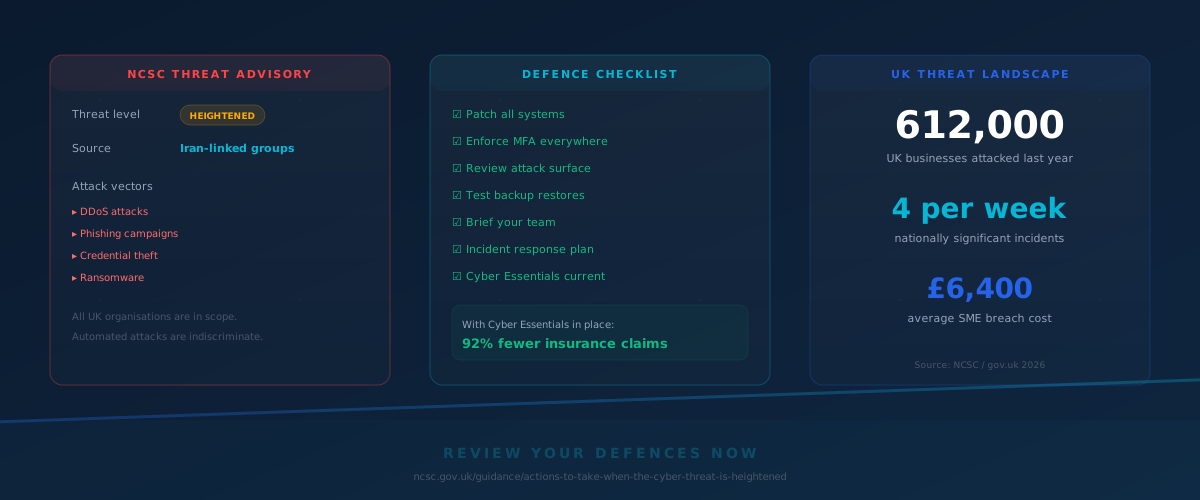
The NCSC has warned UK organisations to review their cyber security in response to tensions in the Middle East. The direct threat to most UK businesses is currently low, but the indirect risks are real — particularly from hacktivist groups launching DDoS attacks, phishing campaigns and credential theft.
In short: You probably are not a direct target. But automated attacks hit everyone. Review your defences now.
Who should pay attention?
- Businesses with supply chains in the Middle East
- Organisations in energy, transport, healthcare or financial services
- Any business with an internet-facing presence (that is nearly everyone)
Even small businesses are not immune. Attackers rarely pick their targets carefully — automated phishing and scanning campaigns are indiscriminate.
What attacks look like right now
DDoS — your website or online services overwhelmed with traffic. Disruptive, not sophisticated.
Phishing — emails impersonating government agencies or trusted suppliers. Designed to steal credentials or install malware.
Credential theft — stolen passwords from old breaches used to access your cloud services, email or VPN.
Ransomware — less likely for most SMEs, but possible if you are in a larger organisation’s supply chain.
Seven things to do this week
1. Patch everything
If anything internet-facing has not been updated in the last 30 days, do it now. Firewalls, VPN appliances, email servers.
2. Turn on MFA
Every cloud service, every admin account, every VPN. If staff are still using just a password, you are exposed.
3. Check what is internet-facing
Open ports, old test environments, default credentials. If you do not know, that is the first problem.
4. Test your backups
Confirm they are running, completing, and that you can actually restore from them. Immutable backups are the gold standard.
5. Warn your team
A 60-second message: be vigilant with emails, do not click unexpected links, report anything odd. Most breaches start with a click.
6. Dust off your incident response plan
Who do you call? What is step one? Even a single page with key contacts and isolation steps is better than nothing.
7. Check your Cyber Essentials
Organisations with Cyber Essentials make 92% fewer insurance claims after a cyber incident. If yours has lapsed, renew it.
92% fewer claims. That is not marketing — that is government data.
The bigger picture
The NCSC now reports four nationally significant cyber incidents every week. Over 612,000 UK businesses were hit by attacks in the past year. This specific warning will pass, but the pattern will not.
The businesses that weather these periods well treat security as a continuous practice, not a one-off project.
The NCSC guidance is available at ncsc.gov.uk.
Not sure whether your business is prepared? Our security team can run a free assessment of your current defences.
Learn more →Topics